
The Colorado Senate passes the rideshare safety bill with substantial modifications
- Jurek M. (Fundador)

- Dec 3, 2025
- 3 min read
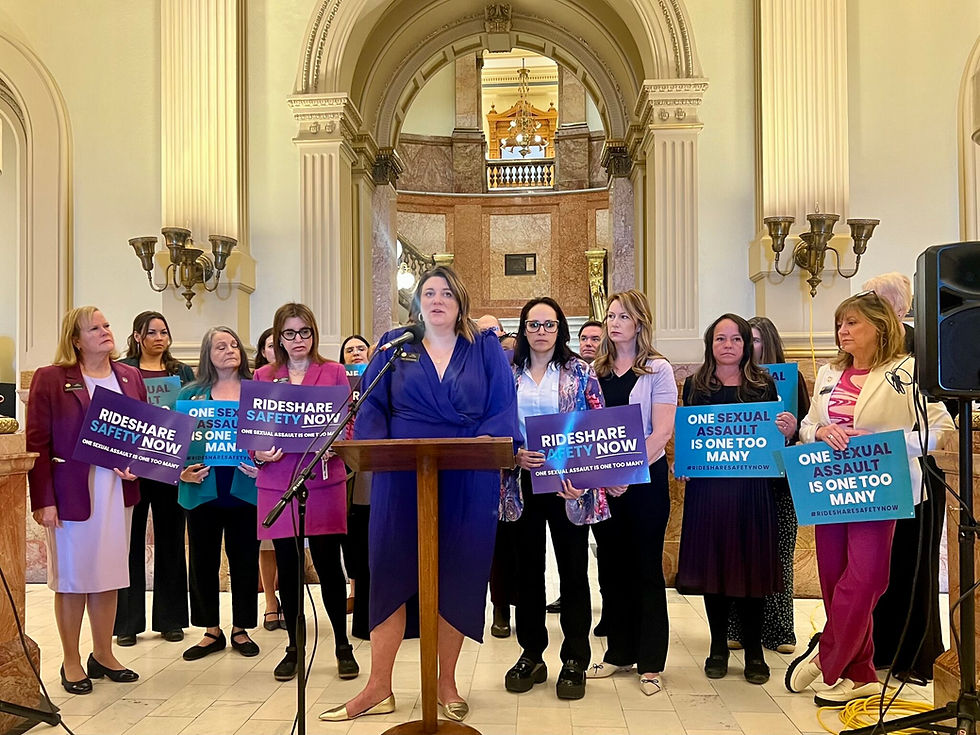
On Tuesday, lawmakers significantly amended a bill aimed at improving the safety of users of ride-hailing services like Uber, two weeks after the company threatened to pull out of the state if the legislation passed without changes.
The Senate then gave preliminary approval to the bill following the amendments. It will go to a final recorded vote on Wednesday, the last day of the 2025 legislative session.
“Uber and Lyft have serious safety issues and are in crisis, whether they want to admit it or not. That’s why they’ve invested billions of dollars in marketing to convince the public that they’re safe,” said Senator Faith Winter, a Democrat from Broomfield and the bill’s sponsor.
Uber’s latest U.S. safety report identified 2,717 reports of sexual assault between 2021 and 2022, the majority of which involved riders.
“Ride-hailing companies like Uber and Lyft exert total control over their platforms and have consistently implemented the cheapest safety measures, which are insufficient,” Winter stated. “They profit at the expense of people, taking their word for it that they are safe.”
House Bill 25-1291, as introduced, would require stricter and more frequent background checks, as well as clearer disqualifications for drivers with a history of assault, harassment, kidnapping, threats, or domestic violence. It would require companies to establish and enforce policies to prevent account sharing or driver impersonation. Drivers would be prohibited from offering food or drinks to passengers.
He also allegedly demanded continuous audio and video recording during trips.
The bill was introduced and championed by Representative Jenny Willford, a Democrat from Northglenn, who sued Lyft earlier this year for an alleged sexual assault that occurred last February. The driver during the incident was using someone else's account.
However, the provisions faced fierce opposition from ride-hailing companies. Uber announced last month, after the bill passed a Senate committee, that it would leave Colorado because the law created too great a legal risk for it to operate, according to The Colorado Sun. This prompted a series of sweeping changes on Tuesday as the Senate considered the bill. Winter indicated that the proponents worked with Lyft on the amendments.
Optional Recording
The most significant amendment allows drivers and passengers to opt in to video and audio recording instead of making it mandatory. The state's public utilities commission would adopt regulations regarding the recordings, including information on the safety benefits for the companies. Uber has a safety feature that allows passengers to choose whether to record audio during a ride.
The proponents stated that the amendment was difficult to accept.
"A driver whose intent is to traffic, kidnap, or assault someone isn't going to fabricate their own evidence," stated Senator Jessie Danielson, a Democrat from Wheat Ridge and the bill's sponsor. "This is something we didn't want to disclose, but we recognize that there are concerns from drivers, companies, and civil rights groups. We couldn't get to that point this time: how to require the driver to film while also preserving these rights."
Another amendment limits the scope of when a driver or passenger can be sued to cases of sexual assault, kidnapping, personal injury, and death.
A driver will also be required to notify the company within 48 hours of pleading guilty to a crime that would disqualify them from driving, and an amendment eliminated company liability if a driver does not plead guilty.
Lawmakers also approved an amendment that would allow the ban on food and water deliveries to be enforced through random compliance checks and would allow companies to remove ratings and reviews of drivers they deem biased.
In addition, an amendment changed the timeframe for a company to review a complaint against a driver from 72 hours to seven days.
It is unclear whether the changes will influence Uber's stance.
“Last-minute changes and a rushed process have made this legislation incredibly complex. With new provisions added this morning without the opportunity to review it, we need time to thoroughly evaluate the bill and determine if it is viable,” a spokesperson wrote in an email. They added that Uber saw the text of the amendments on the Senate floor Monday night.
Winter indicated that the sponsors worked with stakeholders, including Lyft, on the amendments.
If the Senate passes the bill on Wednesday, it will return to the House for approval of the amendments and then to the governor's office for his signature.


Comments